

Chapter test · Chemistry · Class 11
Structure of Atom
This test asks up to 25 questions on the real pattern and marking, and hands you a concept-by-concept report the moment you finish. It covers 4 key concepts: Quantum numbers and orbitals, Electronic configuration, Bohr model and hydrogen spectrum and Dual nature and uncertainty.
What this test covers
4 key concepts, tested the way the exam tests them.
Mapped from EduPeak’s learning framework for this chapter — the same map your report scores you against.
- 1Quantum numbers and orbitals
- Assigns quantum numbers and identifies orbital shapes, nodes and energies.Apply & Analyse
- 2Electronic configuration
- Writes electronic configurations using Aufbau, Pauli and Hund principles.Apply & Analyse
- 3Bohr model and hydrogen spectrum
- Applies Bohr-model relations to hydrogen-like species and spectral lines.Apply & Analyse
- 4Dual nature and uncertainty
- Applies de Broglie and Heisenberg relations to subatomic scales.Apply & Analyse
This chapter is tested mostly at the Apply & Analyse level.
In your board
Where this chapter sits in your syllabus.
The same EduPeak test, found under your own textbook’s chapter name.
- CBSEStructure of Atom✓ in your syllabus
- Gujarat (GSEB)Structure of Atom✓ in your syllabus
- Madhya Pradesh (MPBSE)Structure of Atom✓ in your syllabus
- Rajasthan (RBSE)Structure of Atom✓ in your syllabus
- Bihar (BSEB)Unit-II Structure of Atom✓ in your syllabus
- Uttar Pradesh (UPMSP)परमाणु की संरचना / Structure of Atom✓ in your syllabus
- ISC (CISCE)Structure of Atom✓ in your syllabus
- Cambridge International A LevelAtomic structure (AS)✓ in your syllabus
- IB Diploma Programme (HL)1.2 The nuclear atom (Structure 1: Models of the Particulate Nature of Matter) · 1.3 Electron configurations (Structure 1: Models of the Particulate Nature of Matter)✓ in your syllabus
Try one
A sample question from this chapter.
Drawn fresh from the chapter’s bank on every visit. Reveal the worked solution when you are ready — the way your report explains every question.
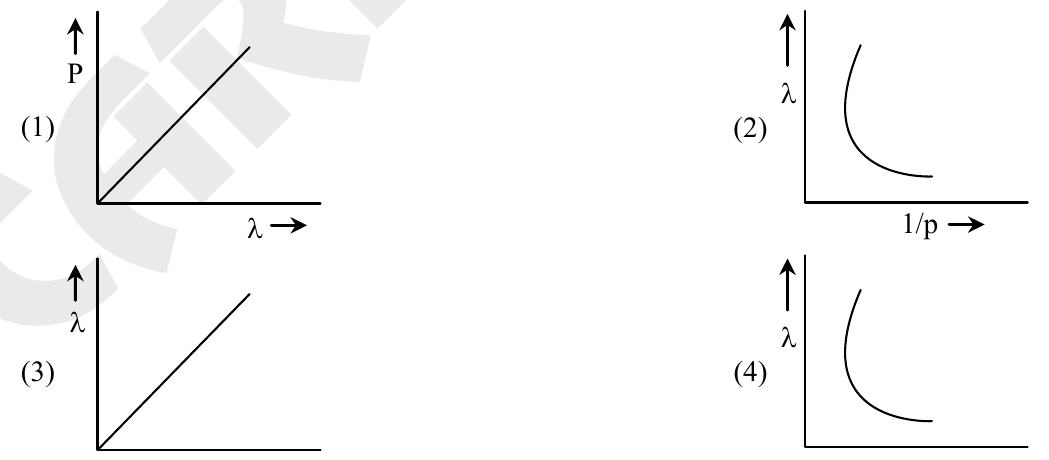
- A.Straight line with positive slope of versus .
- B.Straight line of versus .
- C.Straight line with positive slope of versus .
- D.Rectangular hyperbola (decreasing curve) of versus .
Keep climbing
Related Class 11 Chemistry chapters
Good to know
About this chapter test
How is the test scored?
Which class is Structure of Atom in?
Can I take it more than once?
Is it free?
25 questions. 60 minutes. One honest answer.
Find out exactly where you stand on this chapter — today.
Start this test free →